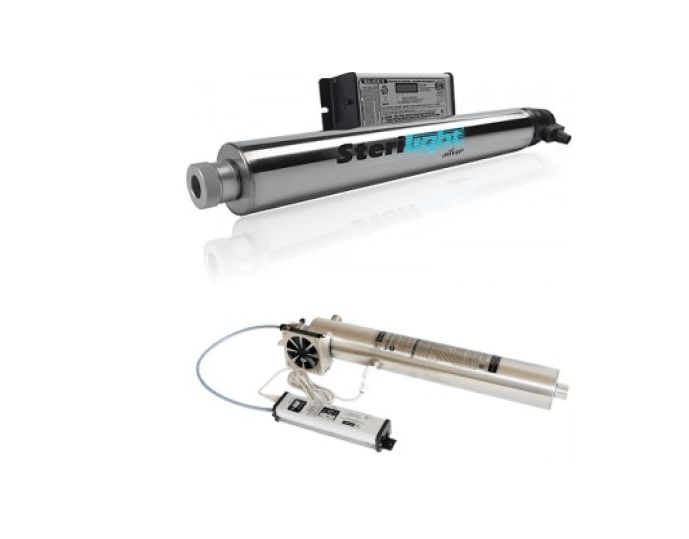
UV devices
We are distributors of the best UV disinfection equipment. We also offer a wide range of replacement parts for devices from the following brands:
- UV Pure Hallett13 / Hallett30, 15XS, 500PN, 750PN, etc.
- UV Pure Upstream NC10-50 / NC10-75 / NC15-50 / NC15-75
- Sterilight
- Trojan / UVmax / Viqua
- UV Dynamics
We offer certified equipment and uncompromising installation. Choose safe water today!
How does a UV device work?
It is a simple and proven physical principle. The UV radiation (wavelength of 254 nm) produced by the UV lamp penetrates the microorganisms present in the water and neutralizes their ability to reproduce. Since the rays must travel through the water to reach the microorganisms, water quality has a major influence on the system’s ability to do its job effectively. The following parameters must be met to ensure effective disinfection:
- Coloration (tannins and lignins): 0 ppm
- Turbidity: <1 ppm
- Suspended solids: <10 ppm
- Iron: <0.3 ppm
- Manganese: <0.05 ppm
- Hardness: 120 ppm (7 gpg)
- UV transmittance (UVT): 80% min.
It is therefore important to resolve any water quality issues beforehand to ensure that your water is properly disinfected. We install a minimum 5-micron filter on all our systems to reduce turbidity to an acceptable level.
However, devices manufactured by UV Pure in Toronto can operate with water containing up to 850 ppm of hardness and 3 ppm of iron, surpassing devices designed by competitors and offering a competitive advantage.
For a quote, nothing could be simpler: contact us by clicking here. We will get back to you within 24 hours.
Classes of UV devices
There are two main types of UV devices on the market: non-certified and certified. One of the differences between the two types is certification by an independent body that certifies that the device tested has proven effectiveness according to specific UV radiation standards. The other major difference is that certified devices alert you with an alarm when the water or the device itself is malfunctioning and the water quality is therefore compromised. The effectiveness of the radiation or treatment is measured by a sensor that indicates the percentage of water transmittance. An alarm is then triggered when the percentage falls below a set threshold.
In contrast, non-certified UV devices are passive and do not alert you if, for example, the quartz sleeve in which the UV lamp is inserted is too dirty to allow the radiation to pass through and affect the water, or if the water quality has deteriorated.
A very interesting option is to install a device that cuts off the water supply when an alarm condition is present. This last option is particularly necessary in cases where the water source is known to be outside the norm in terms of bacteriology.
Custom systems
We can assemble custom systems in our workshop to handle virtually any flow rate. Do you have specific needs? We can assemble a custom system that will meet your requirements.
Frequently Asked Questions (FAQ)
What is UV disinfection for drinking water?
In short, UV disinfection uses ultraviolet light to inactivate microorganisms such as bacteria, viruses, and protozoa to make water safe to drink!
Does UV disinfection make water drinkable?
Yes, if the water is clear and free of particles or chemical contaminants, UV disinfection is very effective in ensuring potability.
Is pre-treatment necessary?
It depends on the quality of your water! It must still undergo at least 5-micron filtration.
A thorough analysis of your water is essential to ensure that it meets the minimum levels required by the manufacturer. The presence of coloration, iron, and manganese can interfere with treatment in the short and medium term by dirtying the internal surfaces of the UV device.
What is the difference between UV disinfection and chlorine disinfection?
UV does not add any chemicals and does not alter the taste of the water, unlike chlorine.
What maintenance should be performed on a UV device?
In the vast majority of cases, the lamp needs to be replaced every year. Depending on its quality, the sleeve must be cleaned properly at the same frequency or more often.
A dirty sleeve can drastically reduce your UV device’s ability to ensure safe water.
Contact information
Any questions? Need a system or analysis? Write to us, we will be happy to answer you.